
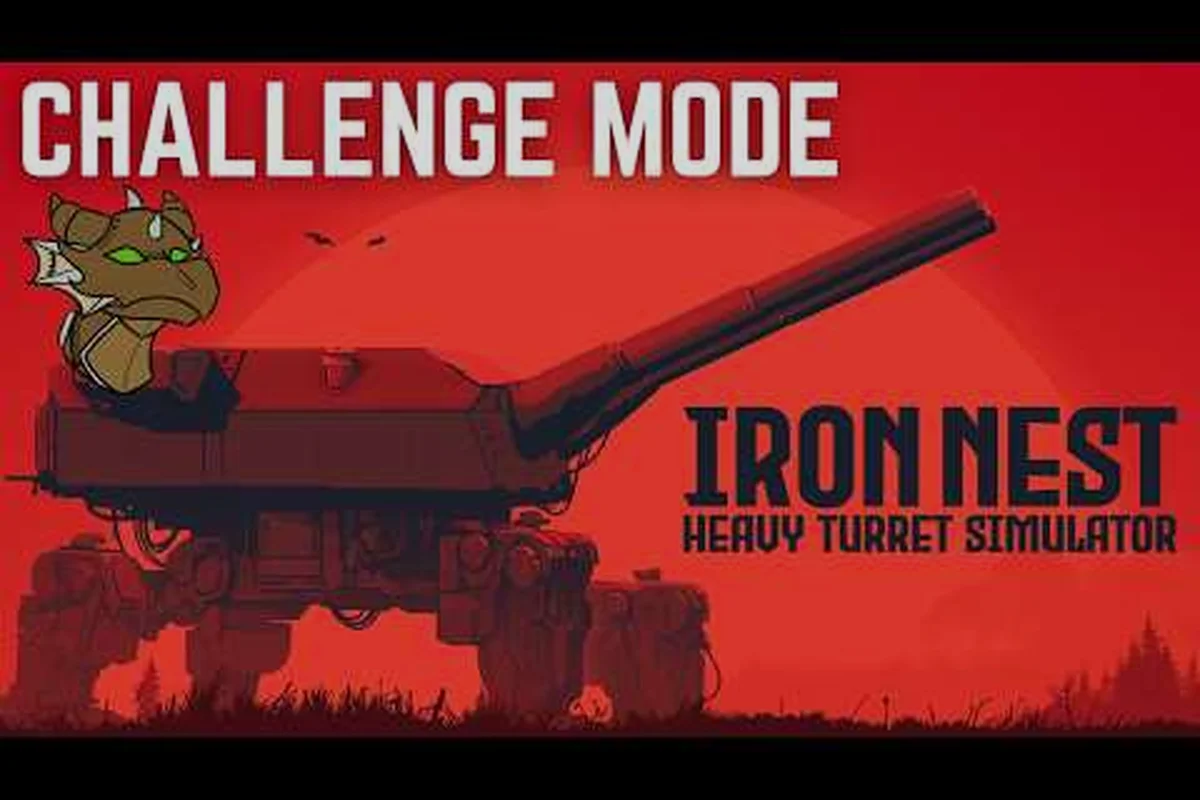
The challenge modes in Iron Nest push artillery crews beyond the standard campaign with time-limited fire missions, accuracy benchmarks, and competitive leaderboard scoring. Each challenge strips away the safety net of unlimited time, forcing crews to execute their firing sequences under pressure while maintaining the precision that the core mechanics demand. This overview links to every challenge-mode article on our site and summarizes the competitive structure.
Iron Nest Challenge Mode Categories
Iron Nest's challenge roster includes three distinct mode types, each testing a different crew skill. Understanding which skill each mode targets helps crews practice the right drills before attempting leaderboard runs. Challenge mode strategies reward crews who adapt their techniques to compressed time budgets.
Speed fire missions reward rapid reload-fire cycles more than individual shot accuracy under compressed time budgets
FDC pause challenges test the crew's ability to maintain mental state during forced simulation interruptions in the fire direction center
Batch targeting develops multi-target coordination that transfers directly to campaign assault missions with distributed enemy positions
Practice mode disables scoring but preserves all mechanical elements for safe drill training without leaderboard consequences
Leaderboard composite scores weight both speed and accuracy, favoring well-rounded crews over single-metric specialists
| Challenge Type | Core Skill Tested | Time Limit | Scoring Metric |
|---|---|---|---|
| Speed Fire Mission | Reload-fire cycle speed | 120-300s | Points per second |
| FDC Pause Challenge | Timing under simulation pauses | 180s | Accuracy × speed |
| Batch Targeting | Multi-target coordination | 240s | Targets neutralized |
Speed Fire Mission Mechanics
Speed fire missions task crews with destroying as many targets as possible within a tight time window. The scoring formula multiplies each target's point value by a time-pressure coefficient, which means faster crews earn exponentially more points. The reload-fire cycle must become second nature — any hesitation at the loading platform or handwheel station directly reduces the final score. Our challenge mode strategy article breaks down the optimal crew分工 for each speed mission variant.
FDC Pause Simulation Mechanics and Timing Windows
The FDC pause challenge introduces periodic simulation freezes where the fire direction center temporarily suspends operations. During each pause, crews must maintain their current firing solution in memory and resume precisely when the freeze lifts, because the target will have shifted during the downtime. This mode specifically tests the crew's ability to hold mental state and execute rapid corrections, which is a skill that transfers directly to high-pressure campaign missions. The FDC pause challenge guide covers the timing patterns and correction strategies.
-
Speed fire missions reward rapid reload-fire cycles more than individual shot accuracy
-
FDC pause challenges test the crew's ability to maintain mental state during forced simulation interruptions
-
Batch targeting develops multi-target coordination that transfers directly to campaign assault missions
-
Practice mode disables scoring but preserves all mechanical elements for safe drill training
-
Leaderboard composite scores weight both speed and accuracy, favoring well-rounded crews over specialists
Leaderboard Scoring and Competitive Play
Leaderboard rankings in Iron Nest track challenge performance across three separate columns — speed, accuracy, and composite score. The composite column combines both metrics with a weighting formula that favors crews who maintain precision while pushing their cycle speed. Competitive crews typically focus on the composite leaderboard because it demonstrates the most well-rounded artillery skills. Our leaderboard strategy guide explains the scoring formula and provides optimization paths for each rank tier.
Challenge Difficulty Tiers
Each challenge mode offers four difficulty tiers that adjust the time pressure, target density, and simulation complexity. Lower tiers serve as practice grounds, while the highest tier introduces additional complications like moving targets and wind changes mid-mission. Challenge mode strategies reward crews who adapt their techniques to compressed time budgets.
| Tier | Time Multiplier | Target Density | Wind Changes | Reward |
|---|---|---|---|---|
| Bronze | 1.0× | Low | None | Basic medal |
| Silver | 0.85× | Medium | 1 per mission | Silver medal + requisition |
| Gold | 0.7× | High | 2 per mission | Gold medal + unique cosmetic |
| Platinum | 0.55× | Maximum | 3+ per mission | Platinum medal + title |
Practice Tools and Training Methods
Before attempting leaderboard runs, crews should use the practice toggle in the challenge menu, which disables scoring but preserves all mechanical elements. This lets crews drill their reload sequences, calibration loops, and wind correction procedures without the time pressure affecting their performance. The batch targeting challenge guide outlines a training progression that builds skills incrementally.
Cross-Mode Training Synergies
Iron Nest's three challenge modes develop complementary skills that transfer between modes and into the campaign. Speed fire missions build raw reload-fire cycle speed, which translates directly into faster completion times on FDC pause challenges (where the pauses interrupt the flow but don't slow the underlying cycle). Batch targeting develops multi-target coordination, which is the most valuable skill for speed fire missions where targets appear at multiple grid references simultaneously. The key training insight is that skill development is non-linear — spending time on your weakest mode produces the largest overall improvement because it addresses the bottleneck in your composite score.
Mental Preparation and Crew Communication
Challenge mode performance depends as much on mental preparation as on mechanical skill. Crews who develop consistent pre-mission routines — checking wind gauges, confirming shell selector position, and verifying the calculator's zero state — avoid the "cold start" errors that plague unprepared teams. Communication protocols matter even more: in multiplayer challenges, the caller must announce every state change (target spotted, calculator ready, round loaded, gunlayer ready) using the same standardized phrases every time. Our challenge mode strategy guide provides the complete communication protocol template used by top leaderboard crews.
| Communication Call | Meaning | Response |
|---|---|---|
| "Spotter up" | Target acquired, coordinates incoming | "Calculator standing by" |
| "Card out" | Firing solution printed | "Loader reading charge [N]" |
| "Round set" | Ammunition loaded, fuse set | "Gunlayer dialing elevation" |
| "Gun ready" | Elevation and bearing confirmed | "Fire on your call" |
| "Shot, spotting" | Round fired, observing impact | "Adjust [direction] [mils]" |
Seasonal Challenge Rotations
Iron Nest's challenge roster rotates with major content updates, introducing time-limited challenge variants that offer unique cosmetic rewards and leaderboard columns. These seasonal challenges typically feature modified mechanics — like dual-target engagements or zero-visibility conditions — that test skills not covered by the standard modes. Tracking seasonal challenge availability ensures crews don't miss limited-time opportunities, and our updates section announces each rotation when it goes live.
Challenge Mode Reward Structures
Each challenge tier awards progressively better rewards, from basic participation medals at bronze tier to exclusive title unlocks at platinum tier. The reward structure incentivizes incremental improvement rather than requiring perfect performance, which means even crews who struggle with the highest difficulty can earn meaningful rewards by completing lower tiers consistently.
| Reward Tier | Medal | Requisition Bonus | Cosmetic | Title |
|---|---|---|---|---|
| Bronze | Bronze star | +50 req | Badge | None |
| Silver | Silver star | +150 req | Badge + stripe | "Sharpshooter" |
| Gold | Gold star | +400 req | Full patch | "Iron Gunner" |
| Platinum | Platinum star | +800 req | Unique emblem | "Steel Nerve" |
Speed Drill Training Regimen
Developing speed at the turret controls requires structured practice, not just repeated mission attempts. The most effective training regimen alternates between isolated station drills (where the player practices only the loading sequence, or only the elevation dial, or only the wind correction) and full-mission integration runs. Isolated drills build muscle memory at each station, while integration runs develop the hand-off timing between stations. Competitive crews typically spend 60% of their practice time on isolated drills and 40% on full integration, because the station-specific speed gains compound faster when the player isn't distracted by multi-tasking.
| Drill Type | Duration | Focus | Target Improvement |
|---|---|---|---|
| Loading-only | 15 min | Shell selector + breech speed | -2s per reload |
| Elevation-only | 15 min | Dial reading + vernier precision | -1s per elevation set |
| Wind correction | 10 min | Drift calculation + re-entry | -3s per wind update |
| Full integration | 20 min | All stations combined | Overall cycle time reduction |
Multi-Target Computation Grouping and Sequential Engagement Strategy
The batch targeting challenge rewards crews who can process multiple targets sequentially without resetting the calculator between each solution. The key efficiency pattern is to compute solutions for targets at similar ranges as a group, because the elevation difference between two targets at 3,200m and 3,400m requires only a small dial adjustment rather than a full recalibration. The batch targeting challenge guide explains the grouping strategy that top leaderboard crews use to minimize total computation time.
Solo vs Multiplayer Challenge Differences
Challenge modes play differently in solo and multiplayer configurations. In solo mode, the single player must mentally queue all four turret stations sequentially, which adds a cognitive switching cost between each action. In multiplayer, each crew member operates one station independently, but they must communicate through standardized voice calls to maintain synchronization. The scoring formula compensates for this difference by applying a 0.85 multiplier to multiplayer scores, which roughly normalizes the advantage of parallel station operation.
Challenge Modes Category FAQ
What is the hardest challenge mode in Iron Nest?
The Platinum-tier speed fire mission is widely considered the hardest challenge, because it compresses the time window to roughly 55% of the bronze standard while simultaneously increasing target density and introducing mid-mission wind shifts that require real-time recalibration. This aspect of Iron Nest's mechanics directly influences crew coordination and overall mission effectiveness, making it essential
Do challenge mode scores carry over between sessions?
Yes. Your personal best on each challenge persists across sessions and is reflected on the global leaderboard. However, seasonal leaderboard resets occur with major content updates, so competitive crews need to re-qualify after each patch. This aspect of Iron Nest's mechanics directly influences crew coordination and overall mission effectiveness, making it essential knowledge for both new and experienced operators.
Can I practice challenge modes without affecting my leaderboard score?
Absolutely. The practice toggle in the challenge menu disables scoring entirely while keeping all mechanical elements active. This is the recommended way to drill specific skills like rapid reload cycles or wind correction under pressure before attempting ranked runs. This aspect of Iron Nest's mechanics directly influences crew coordination and overall mission effectiveness, making it
How does the FDC pause challenge differ from speed fire?
The FDC pause challenge introduces periodic simulation freezes that temporarily halt the fire direction center, requiring crews to maintain their mental state during the interruption and resume precisely when the freeze lifts. Speed fire missions, by contrast, run continuously with no pauses.
Where can I find the full challenge mode leaderboard?
The in-game leaderboard displays your ranking across all three scoring columns, and the community maintains a parallel tracker on the Iron Nest official site that includes historical data and crew-specific breakdowns. This aspect of Iron Nest's mechanics directly influences crew coordination and overall mission effectiveness, making it essential knowledge for both new and experienced operators.