
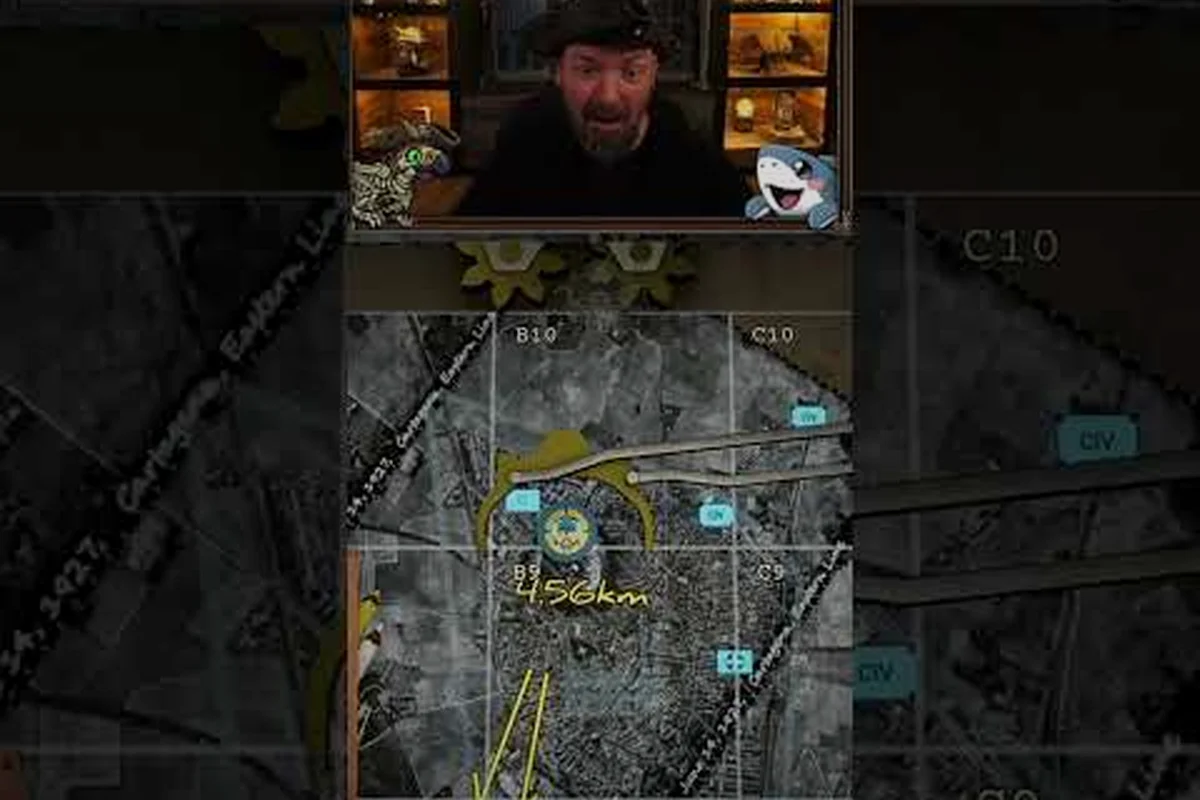
What Makes the 1920s Spain Setting Central to Iron Nest
Iron Nest plants its boots directly in the Iberian Peninsula during a turbulent decade that never quite existed in our timeline. The game frames Spain — and by extension, a unified Iberian theater — as the first major proving ground for diesel-powered war machines, a deliberate narrative choice that lets developer Nick Nieuwoudt and writer Dominik Latos compress half a century of industrialization into one chaotic decade.
-
The 1923 Primo de Rivera coup is the divergence point for the alternate timeline
-
Three industrial-political blocs replaced traditional party politics
-
The Royalist Directorate controls Madrid and central Castilian territories
-
Mercantile Leagues operate as contract warriors with shifting loyalties
-
Syndicalist Workers' Councils field jury-rigged turrets in the south
-
Walking turrets emerged from 1920s mechanization and diesel-punk engineering
-
The newspaper consequence system tracks every obeyed or defied order
-
Iron Nest's 1920s Spain retains the real Mediterranean coastal roads and Pyrenees mountain passes that define the tactical geography
-
The Iberian central plateau provides the flat terrain ideal for walking turret deployment and long-range artillery engagements
-
The alternate 1920s technological timeline produces diesel-electric hybrid engines that would have been plausible with earlier military investment
According to the Iron Nest Steam listing, the title positions itself as a diesel-punk heavy turret simulator in which players man a 5,000-ton quadruped artillery platform. The Iron Nest 1920s Spain setting supplies the scaffolding that makes this absurdly massive machine feel grounded — because everyone in-universe already accepts mechanized warfare as the new normal, no one in the loading crew pauses to ask why a steel behemoth is rolling through their olive grove.
| Element | Real 1920s Spain | Iron Nest 1920s Spain Setting |
|---|---|---|
| Political structure | Constitutional monarchy, then dictatorship under Primo de Rivera | Prolonged deadlock between monarchist and republican factions |
| Industrial output | Limited heavy industry | Mature diesel-punk war economy fed by foreign investors |
| Foreign involvement | Minor diplomatic pressure | Active proxy wars backed by rival European powers |
| Battlefield scale | Rural skirmishes and garrison conflicts | 15 fully developed war zones across Iberia |
The table above captures the gap between real history and the Iron Nest lore. By stretching just a handful of real technological and political trends, the writers produce a stage where ideologies, foreign capital, and experimental artillery collide in a setting that feels historically familiar but technologically alien — and that is precisely the selling point of the Iron Nest 1920s Spain setting.
The Fractured Iberia: How Iron Nest Builds Its Spanish Backstory
The Iron Nest story treats Spain as more than a backdrop — the country functions as a deliberate narrative pressure cooker. By freezing the timeline at a point where the real Spanish monarchy collapsed, the designers get to ask a counterfactual: what if industrialization had accelerated fast enough to outpace the political fracture?
The Monarchy vs Republic Standoff
Rather than resolving the tensions with the real 1936–1939 civil war, the Iron Nest lore pins the country in a frozen constitutional crisis. Crown loyalists defend the aristocracy and Church endowments, while republican militias push for land reform and worker conscription. Both factions need firepower, and that necessity is precisely why the central turret you operate exists. The platform is leased, not owned, and the newspaper system rewards you differently depending on which side's sympathies you cultivate. For a closer read on that faction balance, see our guide on the monarchy vs republic conflict.
Why the 1920s Specifically
Choosing the 1920s over a generic "early 20th century" gives the writers room to bend real history without breaking it. The decade sits between the loss of Spain's last overseas colonies in 1898 and the eventual 1931 abolition of the monarchy — a window where nationalism, militarism, and early diesel experimentation all coexisted in the historical record. By stretching the timeline so diesel motors become battlefield-ready a decade or two early, the Iron Nest 1920s Spain setting produces a plausible-but-wrong tech tree that audiences accept at a glance. Players see recognizable uniforms and field rations alongside riveted quadruped machines that should not exist, which sells the suspension of disbelief faster than a fantasy name ever could.
The Iberian War Theater: 15 Zones Rooted in Spanish Geography
Players do not fight across a generic European map. The Iron Nest 1920s Spain setting uses real Iberian terrain as the bones of every operation, with each region carrying its own political flavor and logistical profile. Terrain altitude directly drives the ballistic calculator values you solve inside the turret, which means the Spanish geography is functional, not just cosmetic.
| War Zone Region | Historical Anchor | Primary Faction |
|---|---|---|
| Sierra del Hierro | Mountainous iron-mining region | Republican |
| Vega del Ebro | River-valley farmlands | Monarchist |
| Puerto Gibraltar | Strait-facing naval port | Contested |
| Meseta Central | High plateau, capital approaches | Contested |
| Costa Lusitana | Western coastal enclaves | Foreign-backed |
| Costa Brava Oilfields | Refinery network | Foreign-backed |
| Pyrenees Frontier | Mountain-pass defensive line | Monarchist |
| Asturias Industrial | Coal and steel heartland | Republican |
The full 15 war zones in the final release span everything from the Pyrenees passes to the southern olive belt, giving each engagement a different ground elevation, weather profile, and supply challenge. Reports from the demo period indicated demo players spent almost as much time reading the regional briefing as they did firing, which suggests the geographic texture is carrying real narrative weight. For a deeper breakdown of how this fictionalized Iberian geography maps to real Spanish provinces, check the alternate history Spain analysis.
Dieselpunk Aesthetics and 1920s Spanish Flavor
The Iron Nest lore borrows as much from film and art as from history. The visual team riffs on the riveted steel of pre-war European heavy industry, the propaganda posters of the early 20th century, and the gas-mask-and-leather-trenchcoat silhouette that has become a dieselpunk shorthand across the genre. Players walking into the turret for the first time see telegraph keys, brass slide rules, and grid-paper plotting tables — every prop picks up the aesthetic thread from the Iron Nest 1920s Spain setting.
Visual Cues Players Actually Notice
When you boot a mission, the screen layers tell the Iron Nest story before any text loads. Telegraphic orders type across a mechanical ticker, tactical maps sketch on grid-plotted kraft paper, and the in-game newspapers that surface after each shot lean heavily on 1920s serif typography. These touches matter because they ground the 5,000-ton quadruped turret inside an iconic decade, giving players a frame of reference — even if it is a frame borrowed from a film noir.
| Aesthetic Element | Setting Reference | Where It Appears |
|---|---|---|
| Riveted steel plates | Iberian dockyards | Turret interior, loading bays |
| Sepia newsprint | 1920s Spanish broadsheets | Post-firing consequences feed |
| Brass and teak instruments | Pre-war European officer kits | Ballistic calculator, telegraph |
| Uniform caps and aiguillettes | Spanish and French regimental kits | Loading crew portraits |
| Smoggy industrial skylines | Asturias coal region | Distance meshes, loading art |
For the broader visual and mechanical vocabulary that runs through the game, the dieselpunk setting overview maps how these choices compare to other titles in the genre, and it is a useful companion read for anyone trying to understand why the developers leaned so hard on the 1920s Spanish aesthetic.
How the 1920s Spanish Setting Influences Turret Combat Mechanics
The setting is not just window dressing. Every gameplay loop pulls from the political geography of 1920s Iberia, which means your tactical decisions also have narrative weight, and that double layer is what makes the Iron Nest 1920s Spain setting feel unique in the crowded indie sim space.
The Six-Step Fire Loop Has Story Logic
The game's six-step fire cycle — intelligence → plotting → calculation → loading → aiming → fire — mirrors how a 1920s Spanish artillery battery would actually coordinate. Because the loop maps to plausible 1920s doctrine, the Iron Nest 1920s Spain setting becomes a teaching device for how a pre-radar artillery crew really worked, which is part of why the experience resonates with history buffs who otherwise ignore simulation shooters.
| Step | Game Tool | In-Setting Equivalent |
|---|---|---|
| Intelligence | Telegraph receiver | Field-radioed coordinates |
| Plotting | Tactical map with grid paper | Forward observer's chart |
| Calculation | Ballistic calculator slide rule | Range tables of the era |
| Loading | Manual propellant + shell lift | Crew-served shell hoist |
| Aiming | Periscope + handwheels | Layered optical sights |
| Fire | Foot pedal trigger mechanism | Lanyard-pull firing pin |
Newspaper Consequences Track Your Political Impact
Every shot in the game eventually reaches a printed headline, and the papers tilt monarchist or republican based on which targets you prioritize. Striking an industrial zone while monarchist papers are dominant triggers a different scandal arc than hitting a military depot under republican press influence. For a full breakdown of how headlines cascade into campaign outcomes, see the newspaper consequences guide, because the headline system is one of the more inventive integrations of setting and gameplay in the Iron Nest story.
Foreign Backing Forces Choices
Because both Spanish factions accept foreign capital, your actions can be read as endorsements. Heavy strikes against civilian infrastructure risk your foreign backers withdrawing diesel fuel shipments, a punishment unique to the Iron Nest lore because the supply economy depends on imported refined product. Players who ignore the political layer often find their loading crews out of propellant within a few missions, and Steam community posts from the demo period flagged propellant shortages as a common cause of failed runs.
Frequently Asked Questions
Why does Iron Nest use 1920s Spain as its primary setting?
The developers chose the decade because it sits at the exact pivot point of real Spanish history, where monarchist collapse and republican rise were both still possible. According to the official Steam listing, that political pressure makes the Iberian Peninsula a believable stage for first-generation diesel warfare, even though real 1920s technology was nowhere near ready for it.
Is the Iron Nest civil war story based on the real 1936 conflict?
Only loosely. The Iron Nest civil war story borrows uniforms, faction names, and propaganda imagery from the real conflict, then redates the violence into the early 1920s and adds diesel-powered mechs. Real political grievances around land reform, Church endowments, and regional autonomy are present, but the technological ceiling sits far higher than anything the real Spanish army fielded.
How many war zones are tied to Spanish geography in Iron Nest?
The base release ships with 15 war zones, and almost all of them map to real Iberian regions — Asturias, the Ebro basin, the Pyrenees passes, the southern olive belt, and the Lisbon-facing coast. Players can often correlate a war zone's weather and elevation with the corresponding real Spanish province during longer campaigns.
Do I need to understand Spanish history to enjoy the lore?
No. The Iron Nest 1920s Spain setting provides enough visual and narrative scaffolding that newcomers can pick up the monarchist-republican split through play. The in-game telegraph feed, propaganda posters, and newspaper headlines reinforce the political context even for players who never read about the real Spanish monarchy or the Primo de Rivera dictatorship.
Does the setting change after the campaign finishes?
No. The Iron Nest 1920s Spain setting functions as a fixed alternate-history sandbox, and the political deadlock stays unresolved across runs. What shifts between campaigns is which faction's newspapers your firing patterns favor, and those Iron Nest lore flags carry over into a player's permanent record on Steam.