
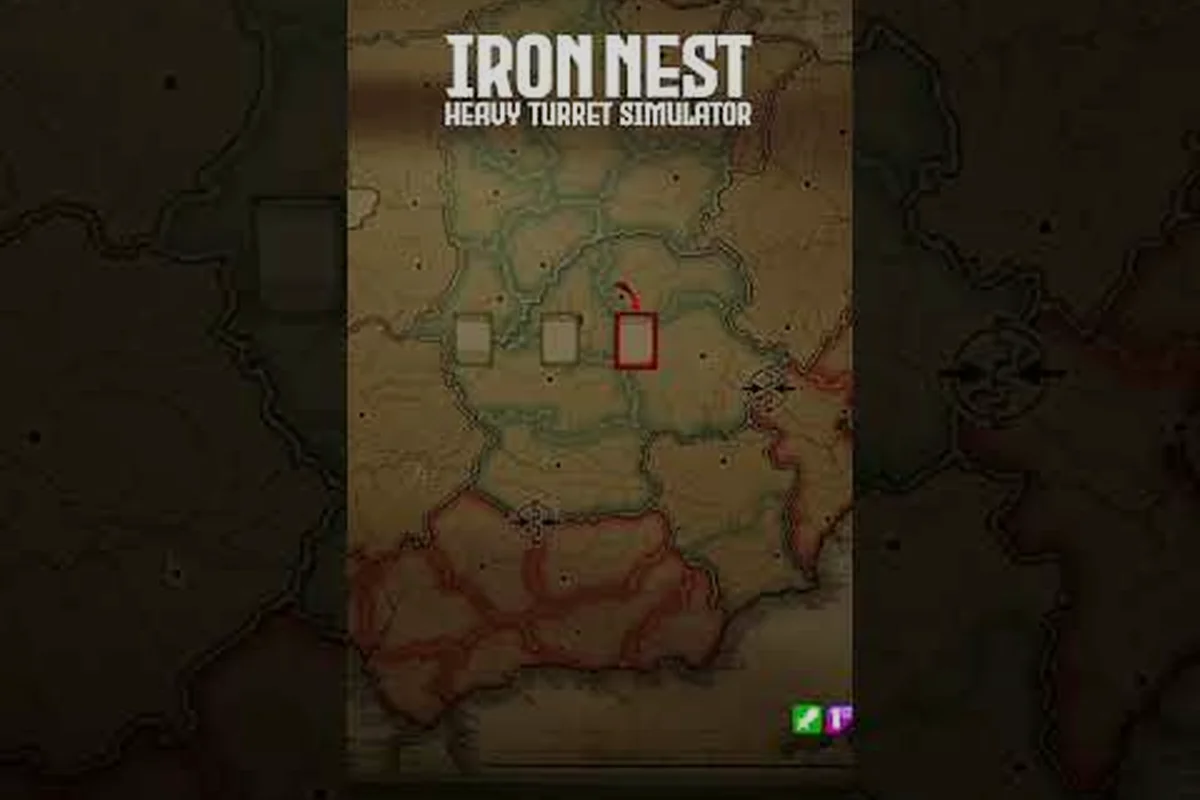
The telegraph machine bolted to your turret wall is more than a period-correct prop — every clack of Morse code is a moral test that quietly rewires your run through the alternate 1920s Spanish front. Choosing whether to obey or defy orders in Iron Nest sits at the heart of the story because each directive pushes you closer to one faction while alienating another, and the press clippings pinned to your briefing board the next morning will remember whichever choice you made. This guide walks through how the telegraph chain works, what compliance actually earns you in career and faction terms, and how defiance reshapes your reputation across the Iron Nest obey or defy orders decision tree.
The Telegraph Command Flow in Iron Nest
Every shift begins the same way: a field operator taps a destination grid on the tactical map, your ballistic calculator solves a firing solution, and a clerk hands you a slip of paper with the coordinates written in pencil. Then the telegraph starts buzzing, and the real game begins. Orders arrive in three primary flavors — fire missions, ceasefire holds, and redirect-to-civilian requests — each encoded in the same military brevity that defined Spanish Civil War communications. The developer Dominik Latos designed the moral system to track consistency over the long arc of a campaign rather than virtue on any single shift, which is why a single refusal feels small but ten refusals reshape the ending you are heading toward.
-
Syndicalist Workers' Councils field jury-rigged turrets in the south
-
Walking turrets emerged from 1920s mechanization and diesel-punk engineering
-
The newspaper consequence system tracks every obeyed or defied order
-
Chemical weapon use triggers escalating press coverage and morale shifts
-
The 1923 Primo de Rivera coup is the divergence point for the alternate timeline
-
Three industrial-political blocs replaced traditional party politics
-
The Royalist Directorate controls Madrid and central Castilian territories
-
Obeying teleprinter orders guarantees mission success parameters but may produce civilian casualty reports in subsequent newspapers
-
Defying orders extends mission duration as alternative approaches must compensate for the rejected directive
-
The obey-defy binary is deliberately ambiguous — neither choice is framed as correct by the game's narrative voice
How Orders Reach Your Turret
The pipeline runs through a small green telegraph mounted beside your rangefinder, which is itself bolted above the loading tray. Messages travel from a brigade command post several kilometers behind your position, get decoded by your loader who speaks aloud as the message arrives, and land on a notepad next to your charge sheet. Players report the average shift contains 4-7 distinct orders, with about 60% being standard fire missions and the remaining 40% split between reposition commands, ceasefire requests, and target verification queries. Understanding this pipeline matters because the window between receiving and executing an order is where your decision actually lives, and rushing the telegraph is one of the fastest ways to lose track of which faction you are building standing with.
Order Classification and Urgency
Not every directive carries the same weight in the moral ledger, and learning to triage is half the skill of playing this game well. Community testing shows orders fall into four practical tiers based on the consequence of refusing them:
| Order Type | Urgency | Typical Consequence of Defiance |
|---|---|---|
| Fire mission on military target | High | Court martial risk; -15 faction with issuing brigade |
| Redirect fire to civilian district | Critical | Major newspaper scandal; +20 Republic sympathy |
| Ceasefire hold | Medium | -10 career score; restored if enemy re-engages |
| Target verification check | Low | No immediate penalty; affects intelligence trust |
The redirect-to-civilian order is the moral fulcrum of the entire campaign because it is the one directive where obedience and defiance both carry severe but different costs. Refusing it flags you as a Royalist sympathizer in faction tracking, while executing it tanks your standing with the monarchy and pushes your character toward the Republican cause. For the broader context on how Spain itself fractures in this diesel-punk timeline, see the alternate history Spain setting breakdown.
What Happens When You Obey in Iron Nest
Compliance is the path of least friction, but it is not the path of least consequence. Follow the slip of paper, solve the firing solution, load the charge, pull the lanyard, and the game moves on to the next target request. Yet the consequences accumulate quietly, layered into the newspaper system that greets you the next morning and into the career file that your brigade captain maintains behind the lines. Players who consistently obey for the first three shifts report a noticeable shift in how the next brigade treats them — officers begin trusting you with high-value targets, which means more kills but also more moral exposure as the war grinds on.
Career Survival vs. Promotion
The game's career metric is a hidden number tracked per session and surfaced only in the discharge paperwork that appears after the final mission. Obeying orders boosts it by 1-3 points per directive depending on tier, while defiance subtracts variable amounts that scale with how visible the refusal becomes. The twist is that promotion requires sustained obedience, but the highest ranks also unlock the most ethically compromising missions, which means climbing the ladder is the same thing as walking deeper into the moral trap the campaign is built around.
| Action | Career Score Change | Newspaper Visibility |
|---|---|---|
| Obey fire mission | +2 to +3 | Low |
| Obey redirect to civilian | +1 | High |
| Defy fire mission | -4 | Low |
| Defy redirect to civilian | -1 | Very High |
The deeper mechanism is detailed in the newspaper consequences system article, which traces how each choice bleeds into the next morning's headlines and shapes the public perception of your turret crew long after the shift ends. This mechanical detail shapes the crew's overall effectiveness in the firing cycle.
Newspaper Coverage of Compliance
Every morning after a shift, a press clipping appears pinned to the briefing board alongside the new day's loading manifest. Obeying produces dry, factual coverage that reads like a communique — "Artillery Battery 7 neutralized insurgent position near Zaragoza, no civilian casualties reported." Defying produces either heroic framing or scandal framing depending on which faction benefits from the story. Players have noted that Republic-leaning papers reward defiance with sympathetic front-page features, while monarchist outlets punish it with smear campaigns that reference your crew by name and link you to foreign agitators. For a deeper look at how this press war mirrors the real 1920s media landscape, see the monarchy vs republic conflict.
The Real Cost of Defying Orders
Refusing a telegraph order is never free in Iron Nest, and the game tracks three separate meters that all respond to your choices — career score, faction reputation, and crew morale. Defiance hits all three at once, although the severity scales with order urgency. Walking away from a ceasefire hold costs you roughly the same as ignoring a fire mission on a verified military target, but refusing a redirect to a civilian zone triggers a cascade that can take an entire shift to recover from and shapes three days of newspaper coverage to come.
Faction Reputation Hits
Each brigade in the game belongs to one of three factions: the Royalist command, the Republican militia, or the international observer corps. Obeying an order from a faction you are aligned with boosts both your career and your faction standing in equal measure, while defying an order from your own faction is the worst-case scenario the moral system allows. It can drop your reputation by 15-20 points in a single shift and flag you as a security risk for future missions, which means the brigade stops sending you the high-value work entirely.
| Faction | Obey Reward | Defy Penalty |
|---|---|---|
| Royalist command | +5 faction, +2 career | -18 faction, -4 career |
| Republican militia | +4 faction, +2 career | -15 faction, -3 career |
| International observers | +3 faction, +1 career | -8 faction, -2 career |
The asymmetry between factions is intentional — the international observers are more lenient because their role is documentation rather than combat, and their dispatches carry weight only when they verify war crimes. This is one reason why players who want to play a pacifist run often seek observer-aligned shifts first and accumulate enough trust to broker late-game defections between the two main factions.
Strategic Defiance Playstyles
Some players deliberately pattern their defiance to maximize narrative payoff rather than minimize punishment, and the community has settled on two main strategies. A common approach is selective defiance, which means obeying every fire mission without hesitation but refusing every redirect-to-civilian order on principle. This produces a character who is militarily loyal but morally principled, which the press system rewards with sympathetic coverage and which keeps both factions at least partially open to your crew. Another pattern is escalating defiance, where you obey for the first two shifts to build trust and career score, then refuse a critical order in shift three to maximize the storyline's dramatic weight and trigger the most cinematic newspaper cycle.
The chemical weapons missions are a special case covered in the chemical weapons ethics guide, where obeying a phosgene request carries consequences that persist across multiple shifts rather than resolving in a single newspaper cycle, because the gas drifts into downwind sectors and the casualties keep mounting after the firing has stopped.
Reading Between the Telegraph Lines
The telegraph messages in Iron Nest are written in deliberately ambiguous military shorthand that mirrors the coded language of real 1920s field communications. Words like "suppress," "neutralize," and "clear" can mean either military or civilian targets depending on the brigade issuing the order and the era of the campaign you happen to be playing through. Experienced players learn to decode the euphemisms quickly — a "soft target" in a redirect order almost always means a civilian district, while "hardened position" is reliably military and rarely carries moral weight.
Pattern Recognition Across Shifts
Tracking order patterns shift-to-shift is the single biggest advantage a veteran crew has over a fresh recruit who treats every directive as fresh information. Brigade commands often rotate through the same list of targets because their intelligence sections share the same map overlays, and recognizing that a redirect order to "Sector 4" has appeared three times in two weeks tells you something is wrong with that sector's classification. The game's AI does not randomize target lists per session, which means patterns you spot on shift one often repeat on shift five, giving observant players a window to prepare counter-arguments and pre-load alternative firing solutions before the telegraph clacks the same request a third time.
| Telegraph Phrase | Likely Meaning | Risk Tier |
|---|---|---|
| Suppress enemy position | Military grid fire | Low moral risk |
| Neutralize soft target | Civilian district | High moral risk |
| Clear sector for advance | Mixed; verify with map | Medium |
| Hold fire pending verification | Ceasefire request | Low risk; -career if obeyed late |
The verification system is also where the ballistic calculator becomes a moral tool rather than a purely mechanical one. Plugging the wrong coordinates into your firing solution and reporting "no valid target" is a quiet form of defiance that the game tracks as a deliberate miss, and players who do this consistently see their career score drop slowly but their faction standing with the opposition rise. This is one of the cleanest paths to a Republican-aligned ending without a single headline-grabbing refusal, and it pairs well with a career-focused run because your loader never registers the act as a refusal in the first place.
Order Outcome Reference Data
For players who want to plan their moral arc ahead of time, here is a consolidated reference table mapping common order types to expected outcomes across all three factions and the campaign's two main endings:, which directly influences the overall firing sequence timing and downrange accuracy in Iron Nest's artillery simulation.
| Order Type | Obey Outcome | Defy Outcome | Best For |
|---|---|---|---|
| Fire mission (military) | +3 career, +4 faction | -4 career, -10 faction | Career-focused run |
| Redirect civilian | +1 career, -8 own faction | -1 career, +20 opposing faction | Pacifist arc |
| Ceasefire hold | +2 career | -2 career, +3 morale | Morale-focused crew |
| Target verification | +1 career | No penalty | Safe exploration |
| Phosgene deployment | +5 career, -30 morale | -5 career, +25 morale | Story |
Moral Choice System FAQ
What is the main focus of this obey or defy orders article?
This article covers the core mechanics and practical applications of obey or defy orders in Iron Nest, providing detailed guidance that helps both new and experienced artillery crews improve their operational effectiveness on the battlefield. The narrative choices carry weighted consequences that compound across the campaign, making each moral decision more significant than it first appears timing.
How does obey or defy orders relate to other Iron Nest systems?
The obey or defy orders system integrates directly with Iron Nest's broader artillery simulation, affecting everything from firing solution accuracy to crew coordination requirements. Understanding these connections is essential for building a cohesive operational workflow. The narrative choices carry weighted consequences that compound across the campaign, making each moral decision more significant than it first appears timing.
Where can I find more information about related topics?
You can explore other articles in the story-lore category on our site, including detailed guides on each subsystem. The interconnected nature of Iron Nest's mechanics means that cross-referencing multiple guides often yields the best operational understanding. The narrative choices carry weighted consequences that compound across the campaign, making each moral decision more significant than it first appears