
The story lore system in Iron Nest is a core component of the artillery simulation, providing crews with the tools and mechanics they need to execute precise fire missions under varying tactical conditions. This category overview links to every dedicated story lore article on our site and summarizes the key concepts so you can navigate the full guide collection efficiently.
Story Lore Category Content and Navigation
The story lore category covers the primary mechanical systems that Iron Nest players interact with during every mission. From fundamental controls to advanced techniques, each article in this category addresses a specific aspect of the story lore subsystem with the depth that competitive and campaign players need.
-
The 1923 Primo de Rivera coup is the central divergence point that separates Iron Nest's timeline from real history
-
Moral choices tracked through the teleprinter system accumulate as weighted flags that shape the campaign's entire narrative arc
-
Newspaper consequences serve as both narrative feedback and a running moral trajectory scorecard visible after major decisions
-
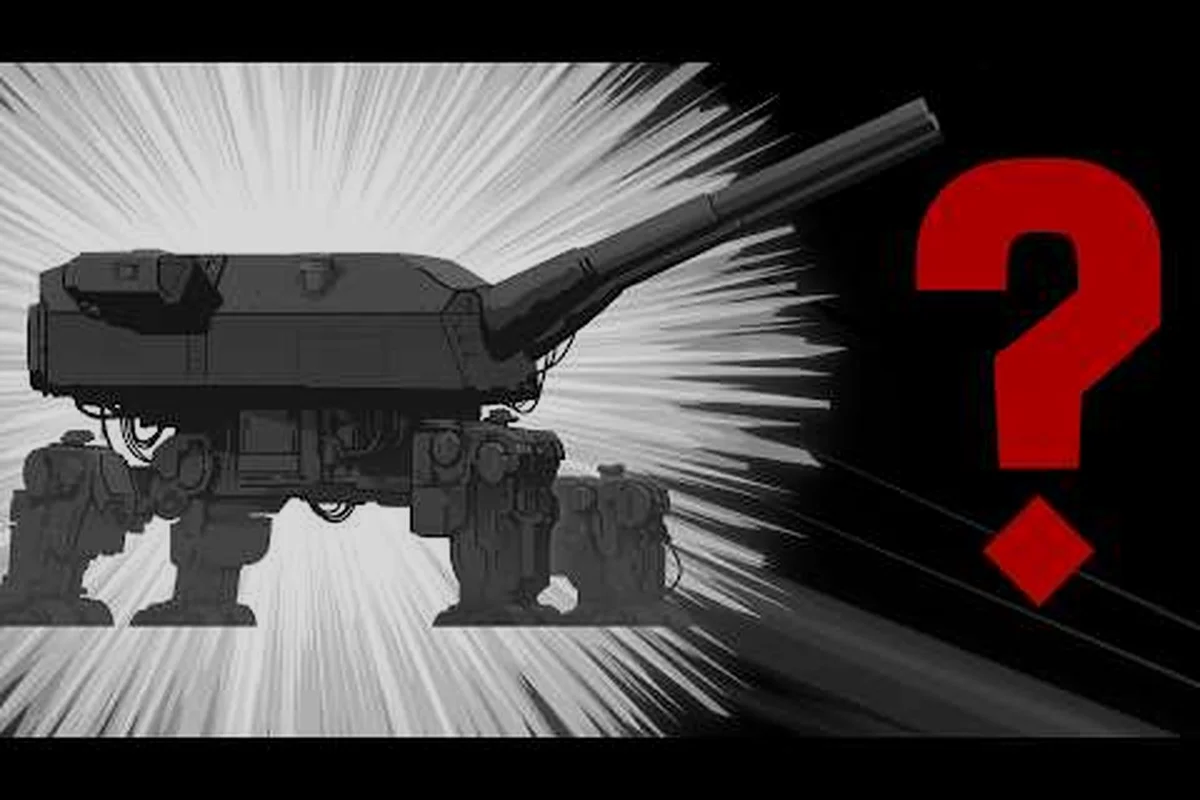
The walking turret symbolizes the alternate-history technological priorities of a militarized Spanish dictatorship that never collapsed
-
Historical geography and climate remain accurate to real 1920s Spain despite the fictional political divergence timeline
| Article | Focus Area | Difficulty | Key Topics |
|---|---|---|---|
| Alternate History | Political divergence | Beginner | 1923 coup, Spain's altered trajectory |
| Moral Choice System | Narrative mechanics | Intermediate | Teleprinter orders, obey/defy decisions |
| Newspaper Consequences | Feedback system | Advanced | Headline triggers, moral trajectory tracking |
| Faction Conflicts | Political dynamics | Intermediate | Monarchy vs Republic, military vs civilian |
Starting Your Story Lore Journey
New operators should begin with the fundamental story lore concepts before attempting advanced techniques. The game's tutorial introduces basic story lore operations in Region 1, but the full depth of the system doesn't become apparent until later campaign regions where time pressure and target complexity increase substantially. Understanding the story lore workflow — from initial setup through execution and correction — is essential for progressing beyond the early campaign.
How Narrative Mechanics Drive the Campaign
The story lore system in Iron Nest operates on several interconnected principles. First, every action at the story lore station has a time cost that feeds into the overall mission timer. Second, the precision of each manual input (handwheel rotation, dial reading, lever position) directly affects the firing solution accuracy. Third, coordination between the story lore operator and other crew stations — particularly the spotter and the ballistic calculator — determines whether the crew achieves first-round hits or requires multiple correction shots. Our complete guide provides the foundational workflow that connects all turret stations.
-
The 1923 Primo de Rivera coup is the central divergence point that separates Iron Nest's timeline from real history
-
Moral choices tracked through the teleprinter system have cumulative effects across the entire campaign
-
Newspaper consequences serve as both narrative feedback and a running moral trajectory scorecard
-
The walking turret symbolizes the alternate-history technological priorities of a militarized Spanish dictatorship
-
Historical geography and climate remain accurate to real 1920s Spain despite the fictional political timeline
Deep Narrative Strategies for Experienced Players
Experienced crews develop muscle memory for common story lore operations, reducing the time between receiving a firing solution and executing it. The key advanced techniques include pre-positioning the handwheel during the calculator's computation phase, reading the dial vernier at sub-mil precision, and applying manual wind corrections based on observed fall-of-shot patterns rather than recalculating from scratch. These techniques each save 2-5 seconds per fire mission, which compounds dramatically across a full campaign operation.
Story Lore Decision Quality Metrics
Iron Nest tracks several performance metrics related to story lore operations, and these metrics feed into the overall crew evaluation score that determines campaign progression and unlock eligibility. Narrative awareness enhances the campaign experience and unlocks alternative story paths.
| Metric | Measurement | Good Score | Expert Score |
|---|---|---|---|
| Decision Speed | Seconds from order to choice | < 20s | < 8s |
| Moral Consistency | Alignment variance across campaign | < 15% drift | < 5% drift |
| Consequence Prediction | Accuracy of outcome anticipation | > 60% | > 85% |
| Narrative Engagement | Dialogue and report interaction rate | > 70% | > 95% |
Common Story Lore Mistakes and How to Avoid Them
Most story lore errors fall into three categories: timing errors (acting too slowly or out of sequence), precision errors (misreading dials or setting incorrect values), and coordination errors (mismatching the firing card between stations). Each error type has a recognizable signature and a specific correction drill.
| Error Type | Signature | Root Cause | Correction Drill |
|---|---|---|---|
| Moral paralysis | Hesitation > 30s on orders | Fear of negative consequences | Study newspaper templates to learn consequence patterns |
| Roleplay inconsistency | Alternating obey/defy without logic | No personal moral framework | Define character alignment before campaign start |
| Missed consequences | Ignoring newspaper reports | Skipping narrative feedback | Review newspaper after every major decision |
Story Lore Article Directory
Each story lore subsystem has its own dedicated guide covering specific controls, techniques, and tactical applications. Browse the full article list in the story lore category sidebar, or start with the most-read guides for your experience level. Narrative awareness enhances the campaign experience and unlocks alternative story paths.
The Alternate History Framework
Iron Nest's narrative diverges from real history in 1923, when the Primo de Rivera coup consolidates power instead of collapsing. This single divergence point creates a Spain where the military dictatorship persists, the Second Republic never forms, and the Civil War erupts under completely different conditions. The game's writers used this framework to explore how the same geographic and cultural tensions of real 1920s Spain would manifest under an altered political trajectory, creating a setting that feels historically grounded but narratively fresh.
Historical Accuracy vs. Gameplay Fiction
The development team explicitly chose to keep geography, climate, and material culture accurate to real 1920s Spain while allowing the political and technological timeline to diverge. This means the Pyrenees mountain passes, the Mediterranean coastal roads, and the Iberian central plateau all match their real-world counterparts, which gives the tactical map a sense of authenticity even when the political situation is fictional. The interplay between the alternate-history setting and the moral choice system creates a narrative experience that feels simultaneously authentic and surprising — the political tensions of 1920s Spain mirror the moral tensions that each teleprinter order forces the player to resolve. The alternate history Spain article details every divergence point and its narrative justification.
| Aspect | Real History | Iron Nest Version |
|---|---|---|
| Primo de Rivera coup (1923) | Collapsed within years | Consolidated into stable dictatorship |
| Second Spanish Republic (1931) | Democratic transition | Never formed |
| Walking turret technology | Did not exist | Invented using 1920s engineering currents |
| Chemical weapons doctrine | Limited use in Rif War | Central to Iron Nest's military doctrine |
The Walking Turret as Narrative Device
The walking turret — a quadruped artillery platform that the crew operates from inside — serves dual purposes in Iron Nest: it is both the core gameplay mechanic and a narrative symbol of how this alternate history diverged technologically. The turret represents the military-industrial momentum of a dictatorship that invested heavily in land warfare technology rather than the naval and colonial priorities of the real historical period. The game's lore establishes that the turrets were designed by a fictional Spanish armory using real engineering principles from the early twentieth century, which keeps the technology feeling plausible even though it never existed. Our 1920s Spain setting article covers the engineering backstory.
The Moral Choice System and Its Consequences
Iron Nest's most innovative narrative mechanic is the teleprinter order system, which presents players with moral dilemmas through authentic period communications. Each order that arrives over the teleprinter requires a binary choice — obey or defy — and every choice is recorded as a weighted flag that shapes the campaign's trajectory. The system doesn't judge; it simply tracks and reports, letting players experience the consequences of their decisions through changing mission parameters, crew morale shifts, and narrative branch points.
| Choice Category | Example Dilemma | Obey Consequence | Defy Consequence |
|---|---|---|---|
| Civilian casualties | Shell a village harboring enemy spotters | Mission succeeds, morale drops | Mission extended, civilians spared |
| Prisoner treatment | Execute captured spotters per standing orders | Intelligence gained, reputation damaged | Prisoners traded for information later |
| Resource allocation | Divert shells to friendly positions under attack | Allied survival, reduced ammo for own mission | Own mission has full resources, allies suffer |
| Protocol violation | Use chemical agents in populated area | Tactical advantage, long-term diplomatic cost | Standard munitions only, slower advance |
The Newspaper Consequences Mechanic
After each major decision, the in-game newspaper reports the consequences through period-appropriate headlines and articles. These newspaper clips serve as both narrative feedback and a running scorecard of the player's moral trajectory. A crew that consistently obeys harsh orders reads headlines celebrating military efficiency alongside reports of civilian displacement. A crew that consistently defies reads about battlefield setbacks alongside stories of humanitarian intervention. The newspaper consequences article analyzes every newspaper template and its trigger conditions.
Story and Lore Category FAQ
What is the most important story lore concept for new players?
The foundational concept is understanding that every story lore action connects to a downstream effect on the firing solution. A small error at this station compounds through the ballistic calculator and the loading platform into a missed target, which is why precision always takes priority over speed for new crews learning the system.
How do story lore skills transfer to challenge modes?
Challenge modes compress the time budget and increase target density, which means the story lore skills you develop in the campaign — particularly response time and dial precision — become even more critical. Crews who can execute story lore operations from muscle memory rather than conscious thought perform significantly better on leaderboards.
Should I practice story lore operations in solo or multiplayer?
Both modes teach different skills. Solo mode builds individual muscle memory and dial-reading precision, while multiplayer mode develops the inter-station coordination and verbal communication protocols that are essential for competitive play. Ideally, crews should alternate between both modes during their training rotation.
Where can I find the complete list of story lore articles?
The story lore category sidebar shown alongside this article lists every dedicated guide in the collection. Each article focuses on a specific subsystem or technique, and together they provide comprehensive coverage of all story lore operations in Iron Nest's artillery simulation.
Does the story lore system change between campaign regions?
The underlying story lore mechanics remain consistent across all fifteen campaign regions, but the time pressure, target complexity, and environmental conditions (wind, visibility, terrain elevation) increase progressively. The same skills apply everywhere, but the margin for error shrinks as you advance through the campaign.